
Gravity-Driven Flow
Precisely set slopes carry wastewater from every lane to the nala by gravity alone.

At the Heart of Society
How Civikor surveyed, planned and supervised a 1.1 km gravity drainage network through the narrow lanes of Kailash Nagar.
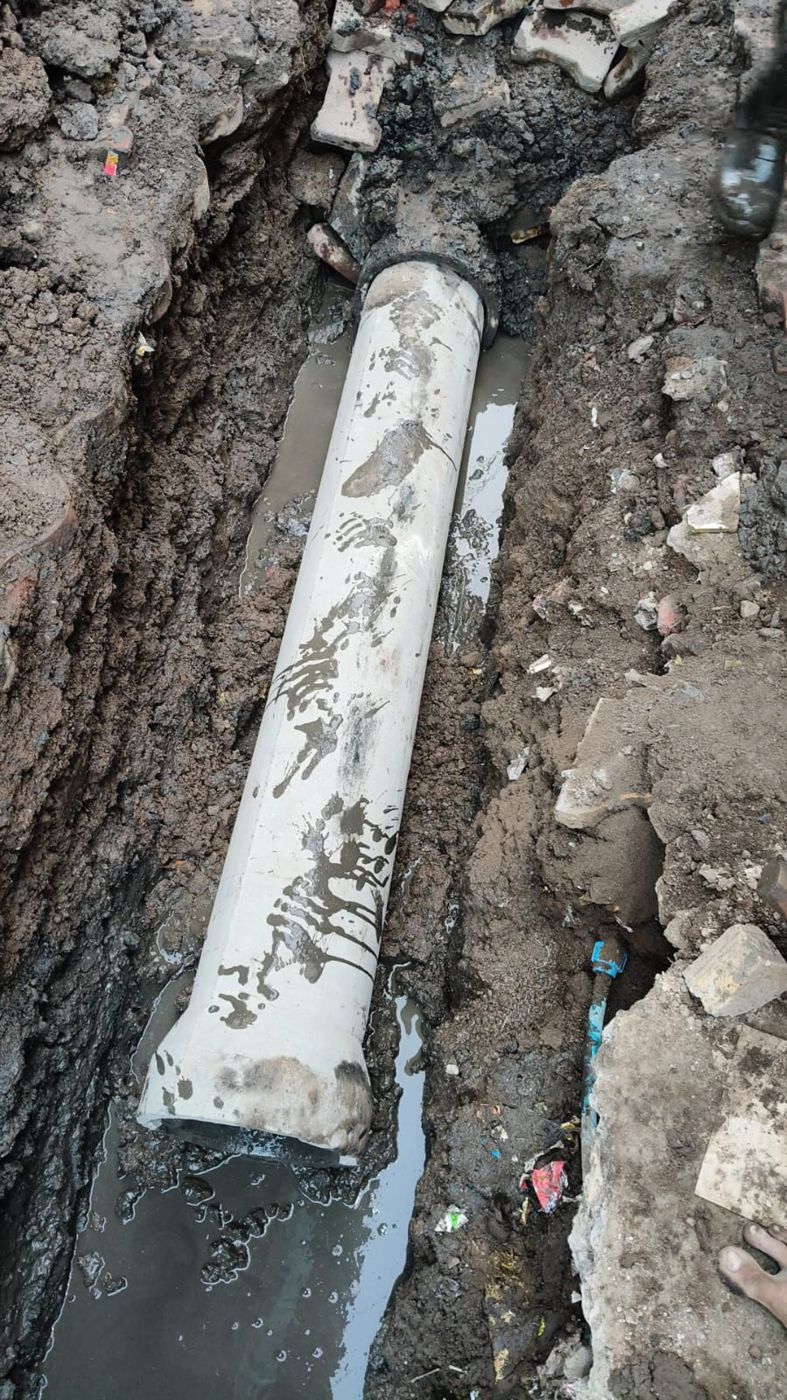
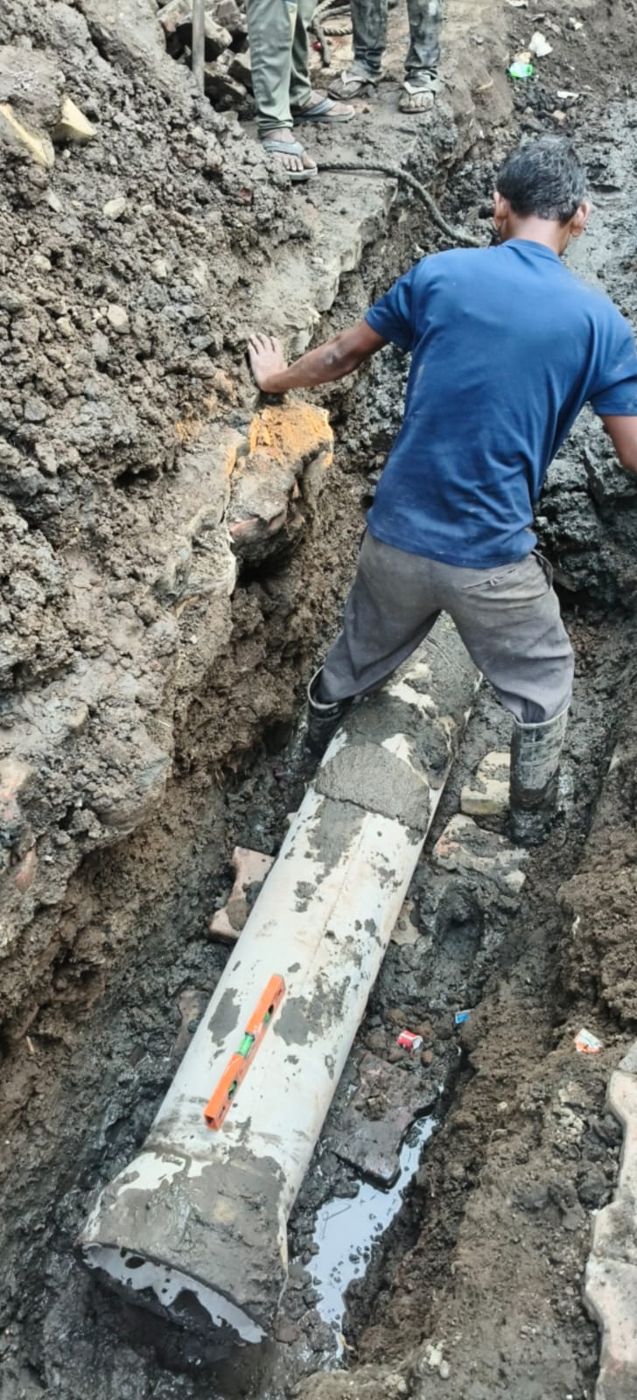
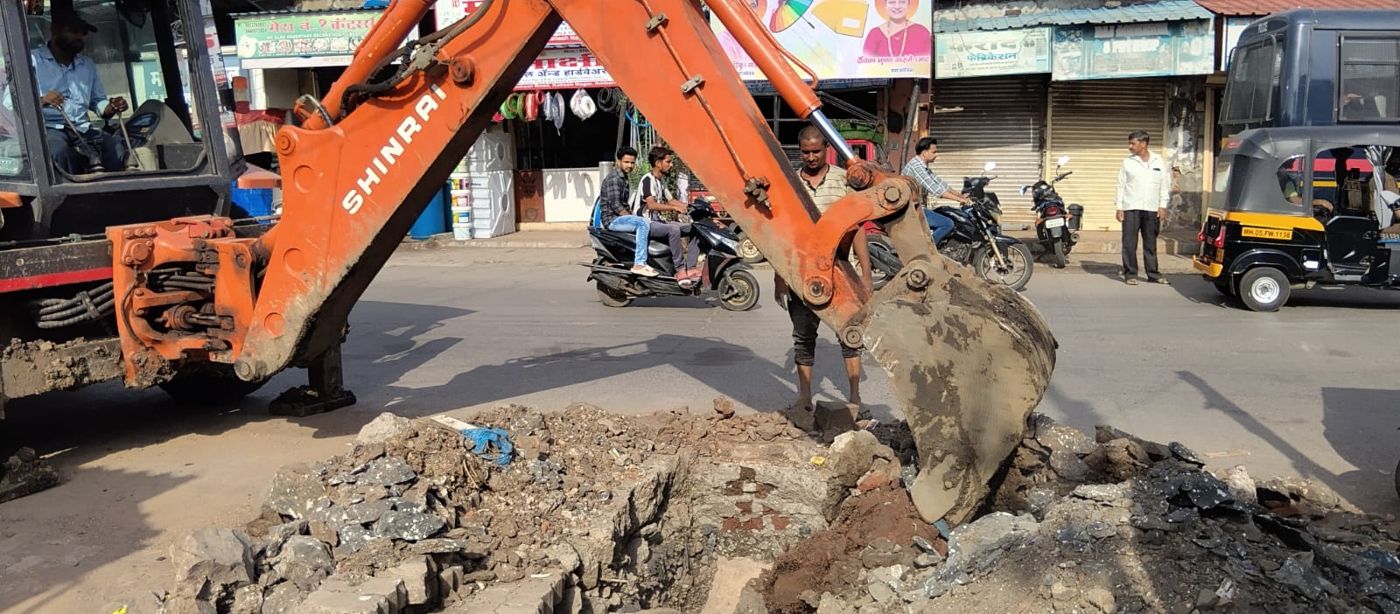 Trenching along the main lane, Kailash Nagar
Project Management Consultancy
Civikor Consultant Private Limited was engaged as the Project Management Consultant for the Construction of Drainage Line at Kailash Nagar, in the Ambarnath Municipal Council area of Ambarnath West.
Kailash Nagar is a dense residential settlement of narrow lanes, with homes, shops and utilities built right up to the road edge. The project needed a network that could collect wastewater lane by lane and carry it to the nala on the settlement's edge — reliably, by gravity, and without long-term maintenance headaches.
Civikor led the work end to end: the ground survey, the strategic flow plan, and on-site supervision and quality control through execution.
During the site assessment, Civikor identified the conditions that would decide whether the network worked on day one — and for years after:
Very little natural fall. Ground levels drop only about 7 m across more than a kilometre of network, so every stretch needed a precisely set slope to keep wastewater moving by gravity.
Narrow, congested lanes. Excavation, pipe laying and machinery had to fit into gallis lined with homes and shops, while keeping residents' access open.
Existing services in the corridor. Electrical poles, city gas lines, existing drains, manholes and chambers sat along the proposed routes and had to be mapped before any digging.
Many branches, one outfall. Lines from nine different lanes had to join a single trunk line at the right levels and discharge into the nala without backflow.
Civikor treated the drainage line as an engineered system, not a trench-and-pipe job. The work moved through three connected stages:
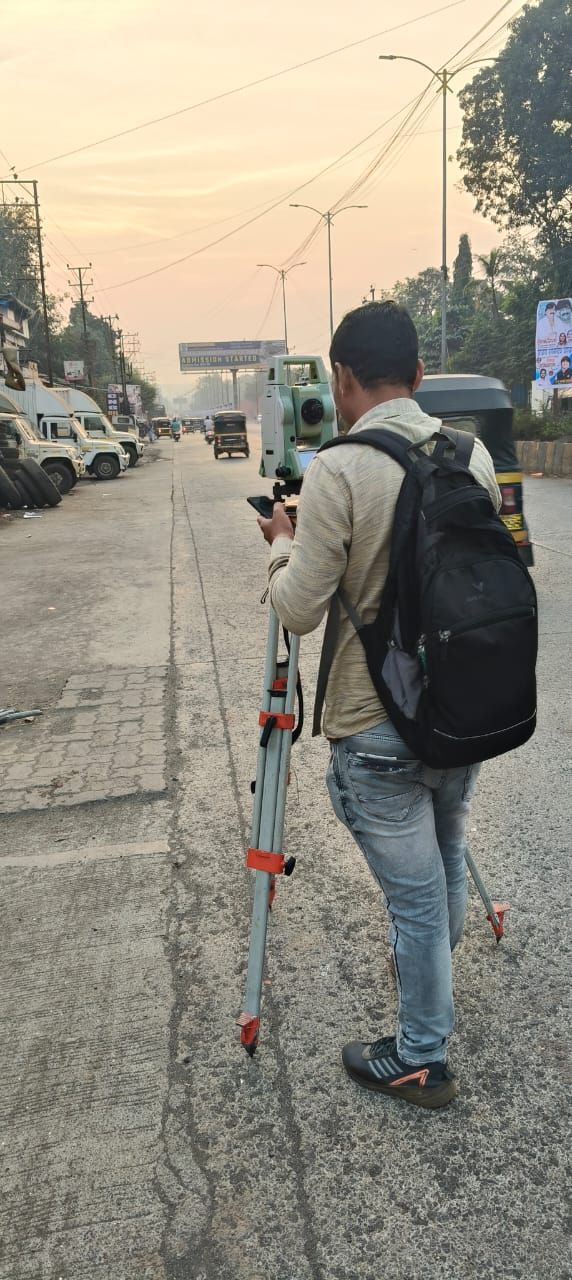
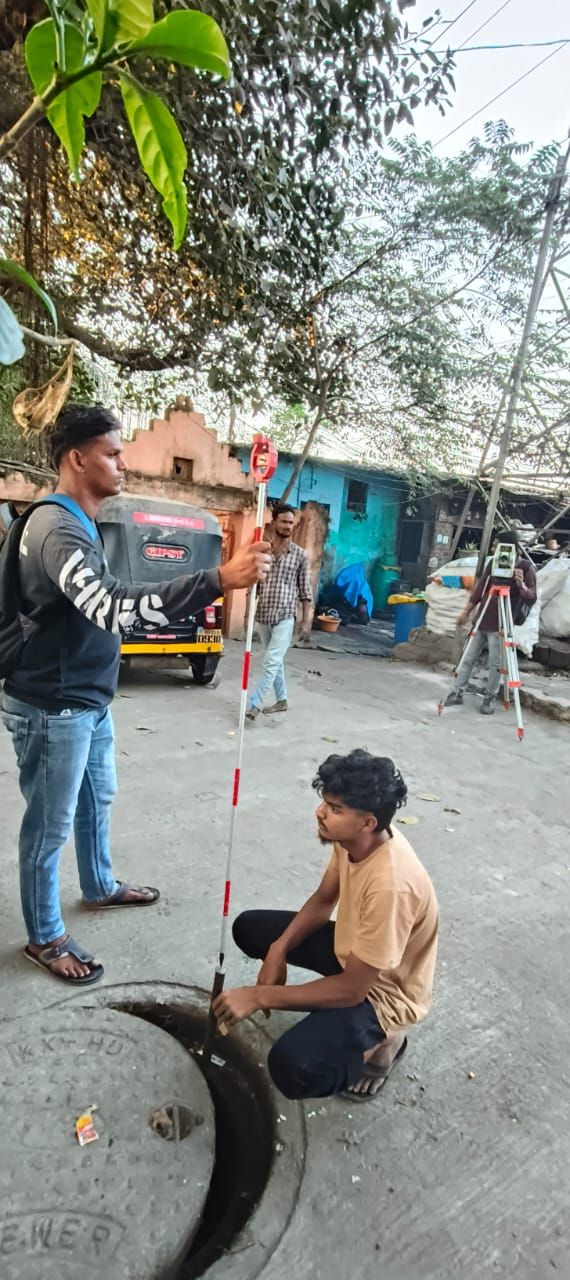
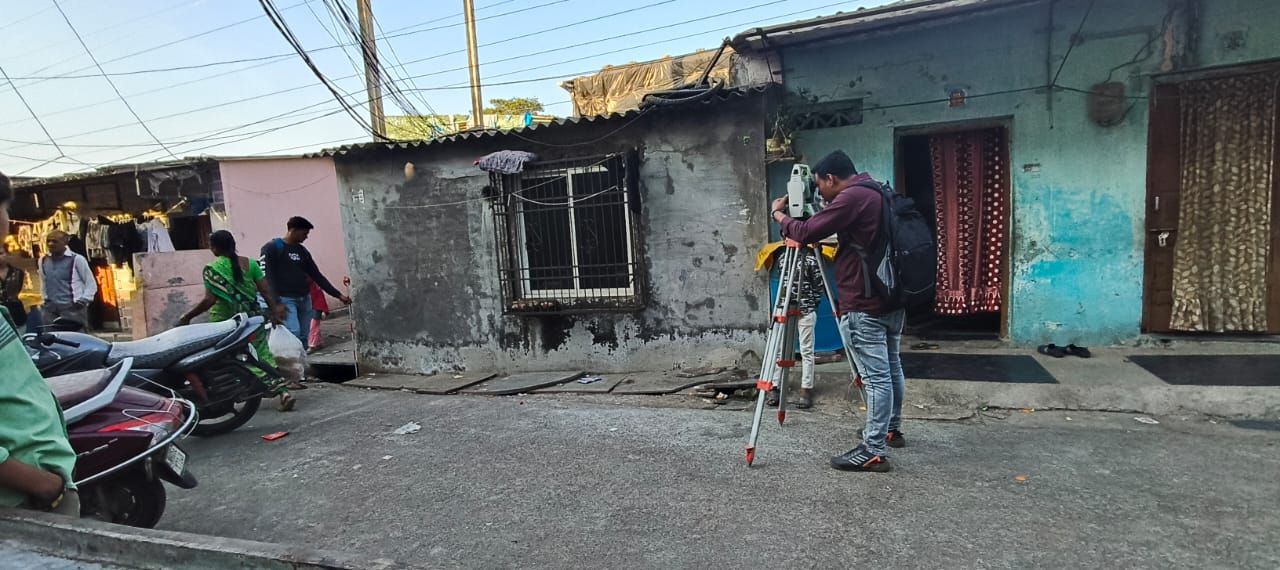
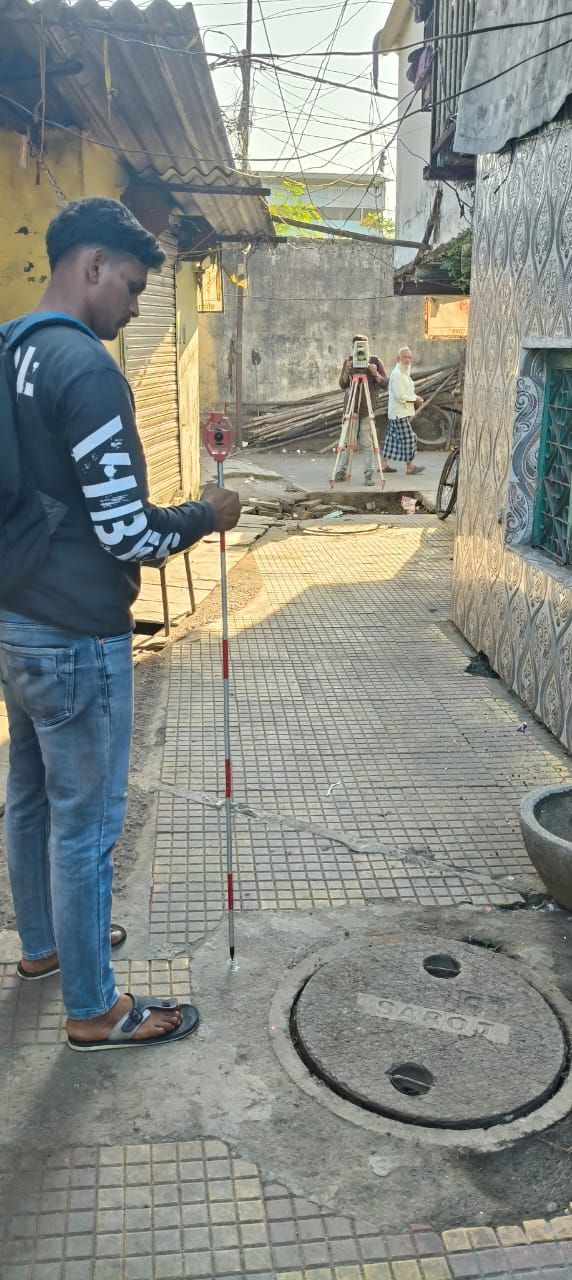
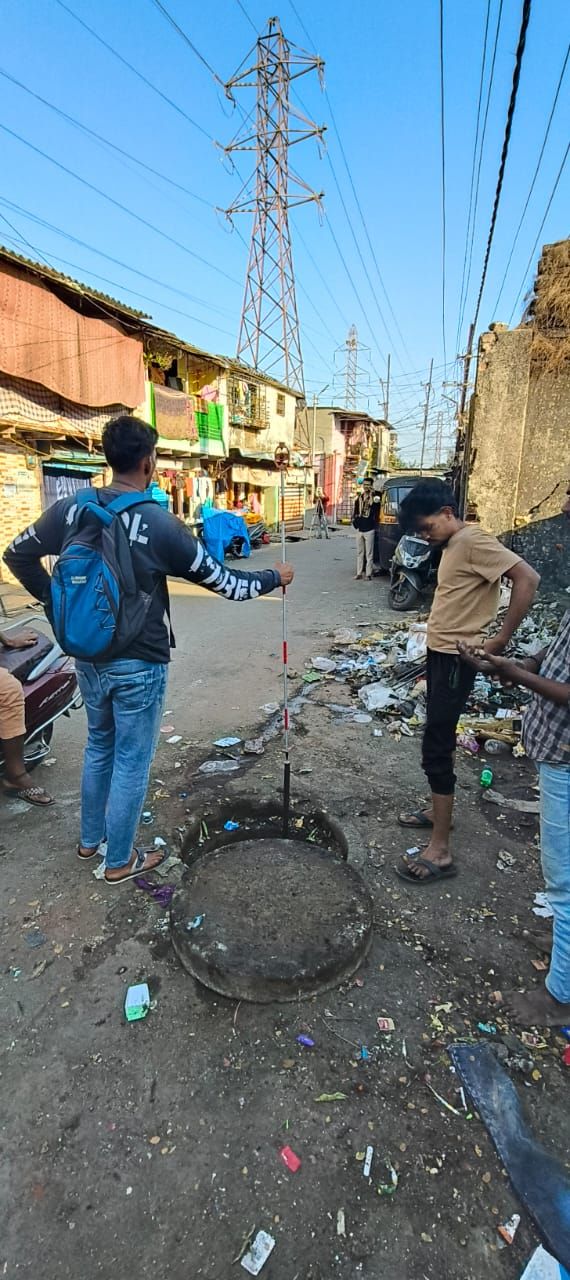
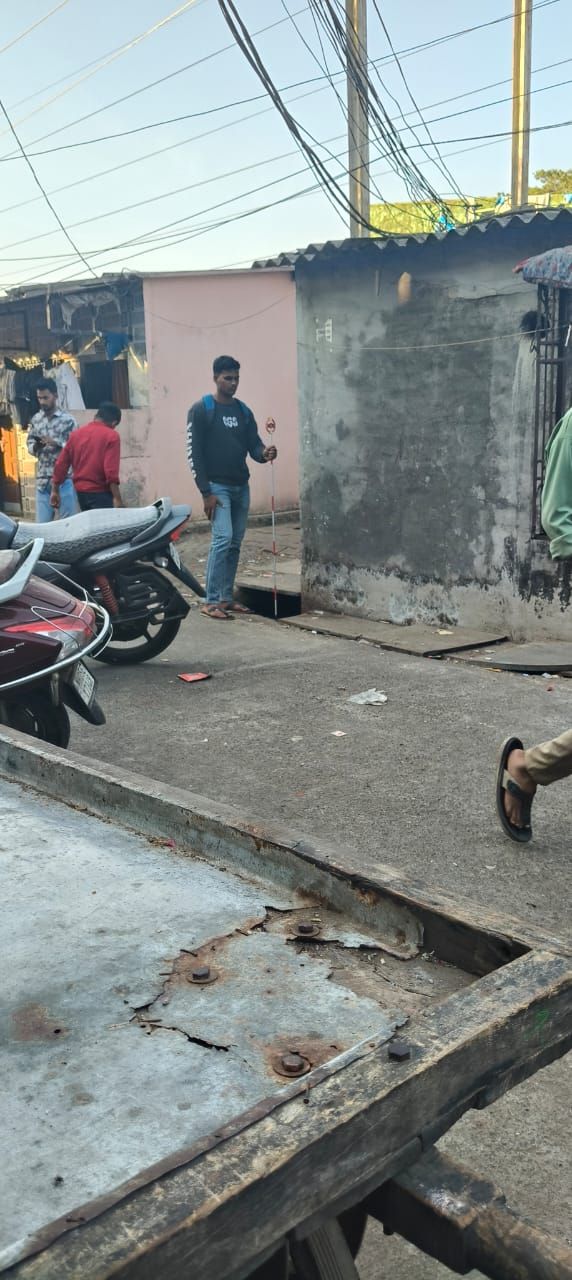
Surveyed every lane in Kailash Nagar, from Toilet Galli and Morya Galli to Bathroom Galli and Khan Galli, recording ground levels along the full length of each proposed route.
Mapped compound walls, plinths, building and shed lines, trees and structures to fix a clear working corridor.
Located existing manholes, chambers, drains, electrical poles and city gas lines so the new alignment could avoid them.
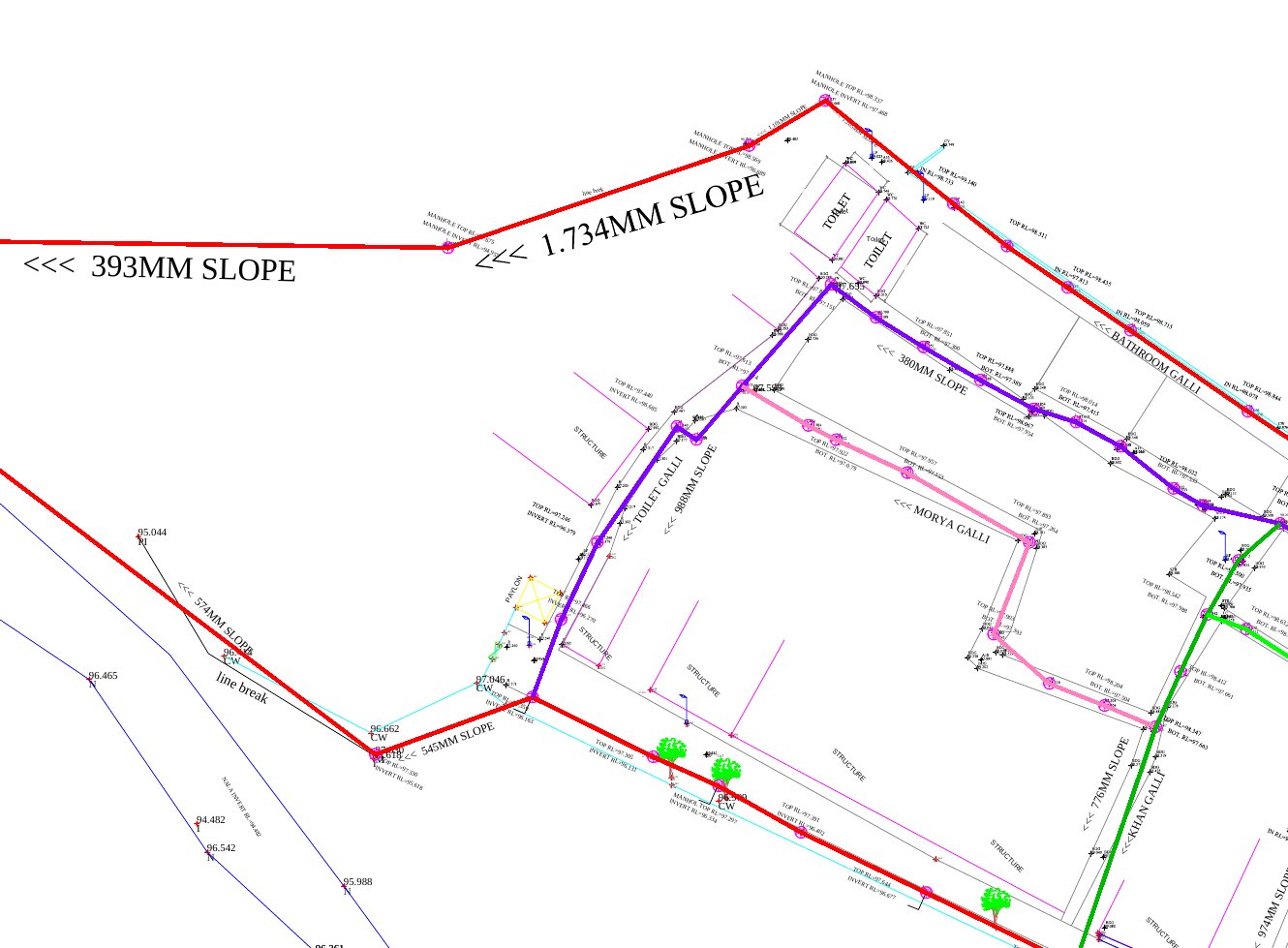
Planned the network as nine interconnected lines totalling 1,125.89 m, led by a 648.80 m trunk line to the nala.
Fixed the top and invert levels at every manhole, and the slope of every stretch, so the whole system drains by gravity.
Set branch junctions at levels that feed the trunk line smoothly, preventing backflow and stagnant sections.
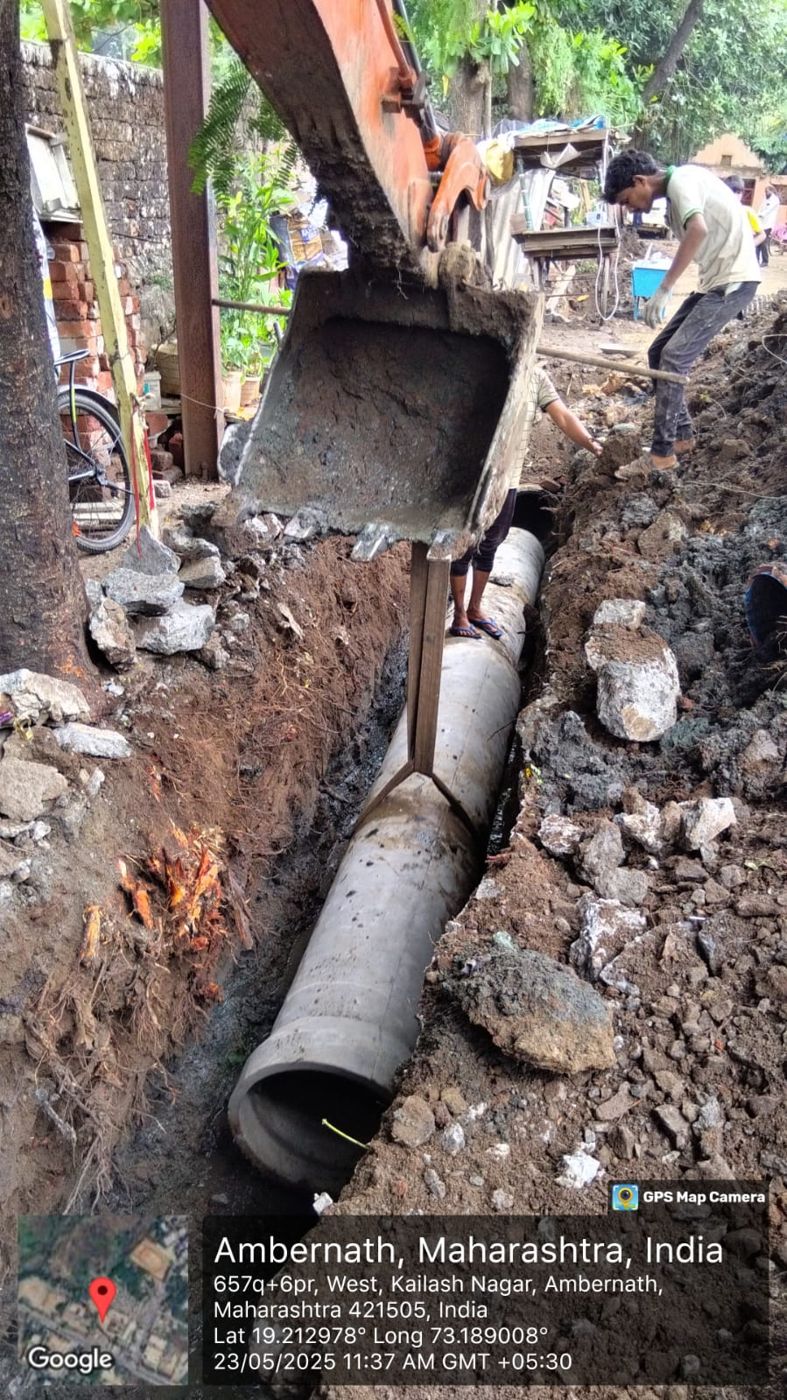
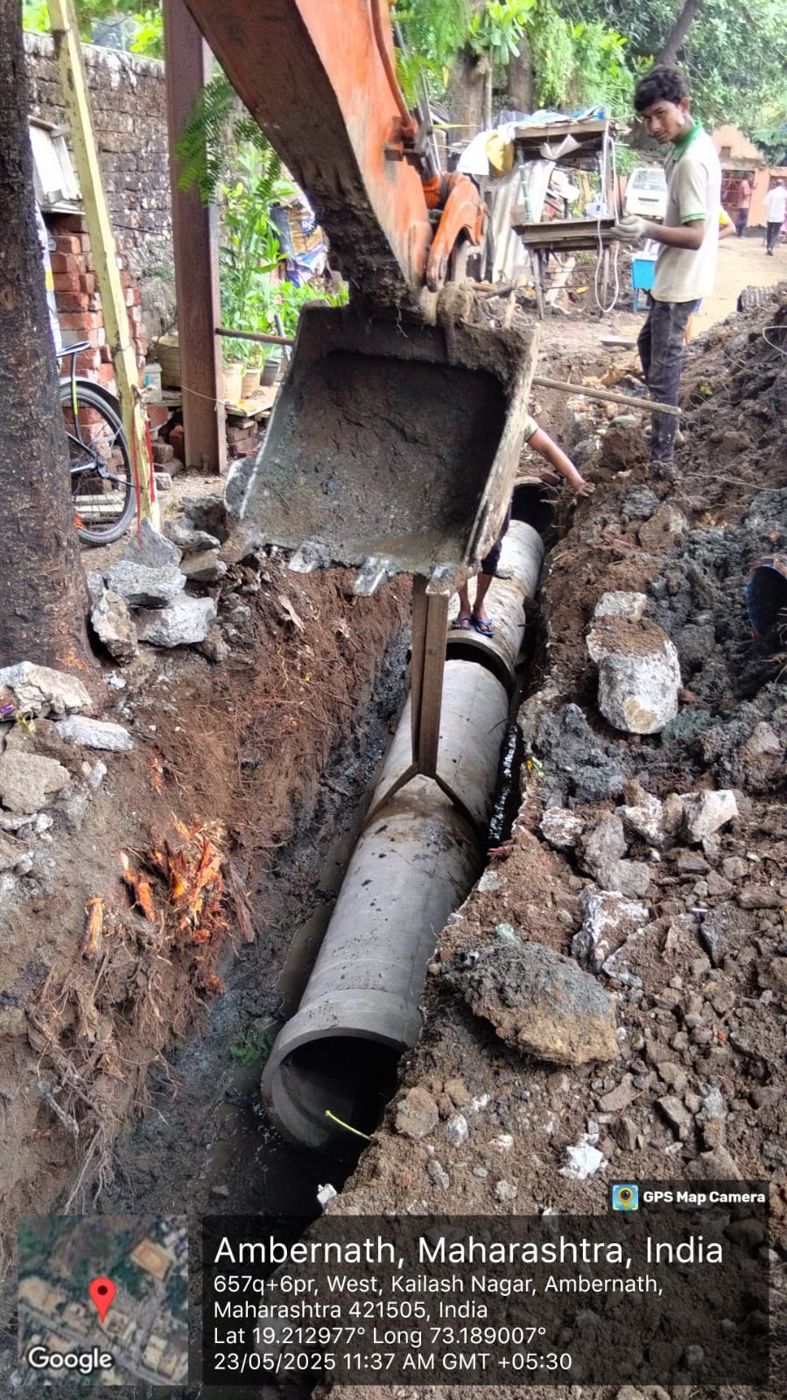
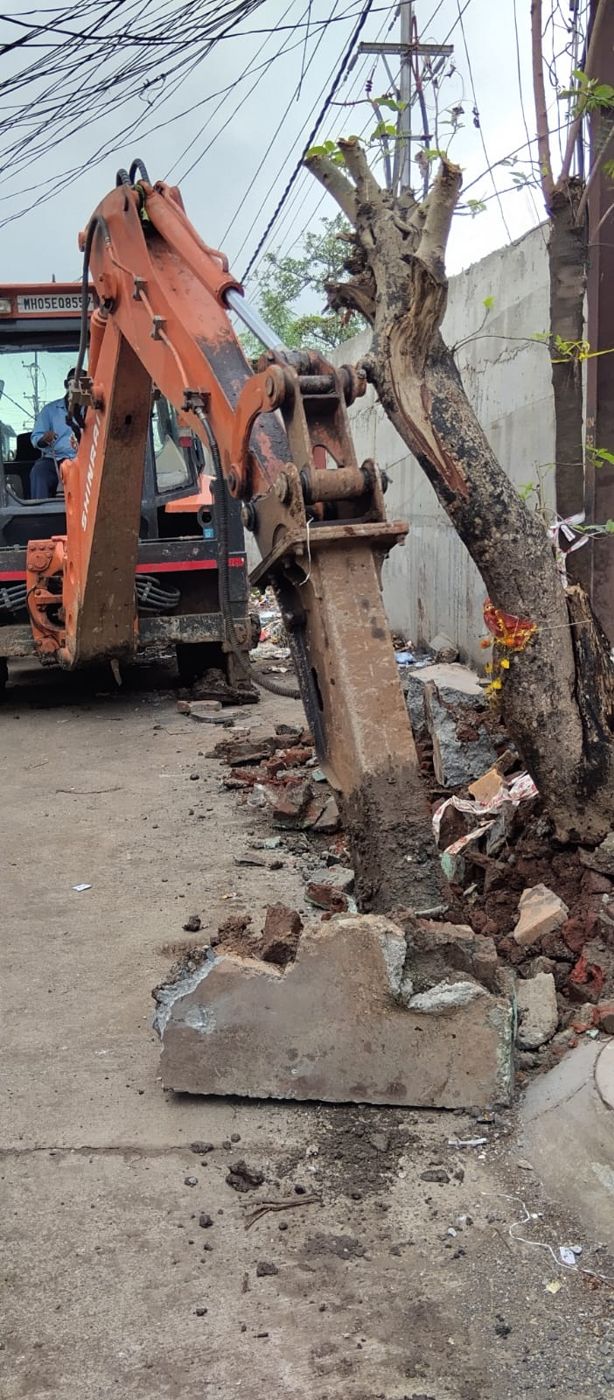
Supervised excavation and trenching lane by lane, keeping work within the surveyed corridor.
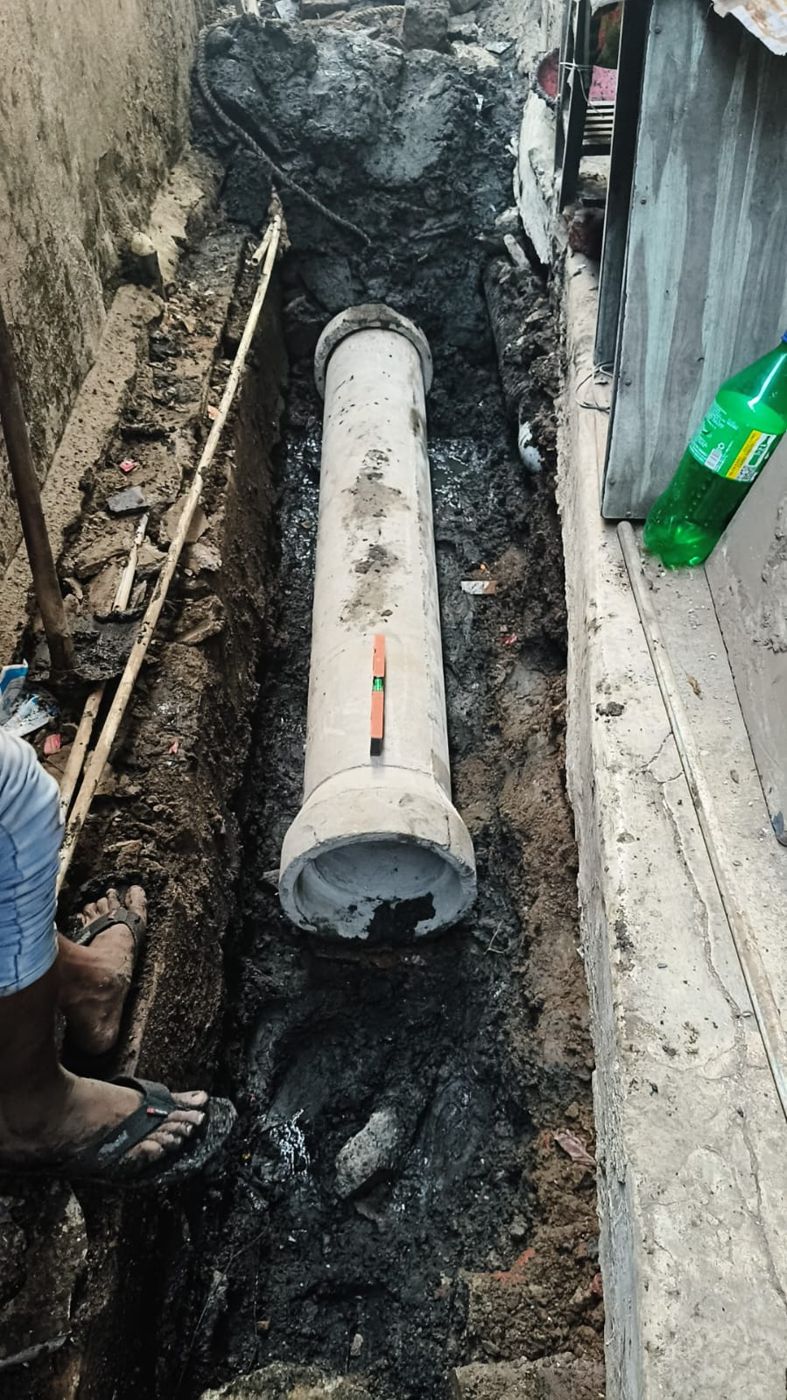
Checked the alignment of each pipe in the trench before joints were made.
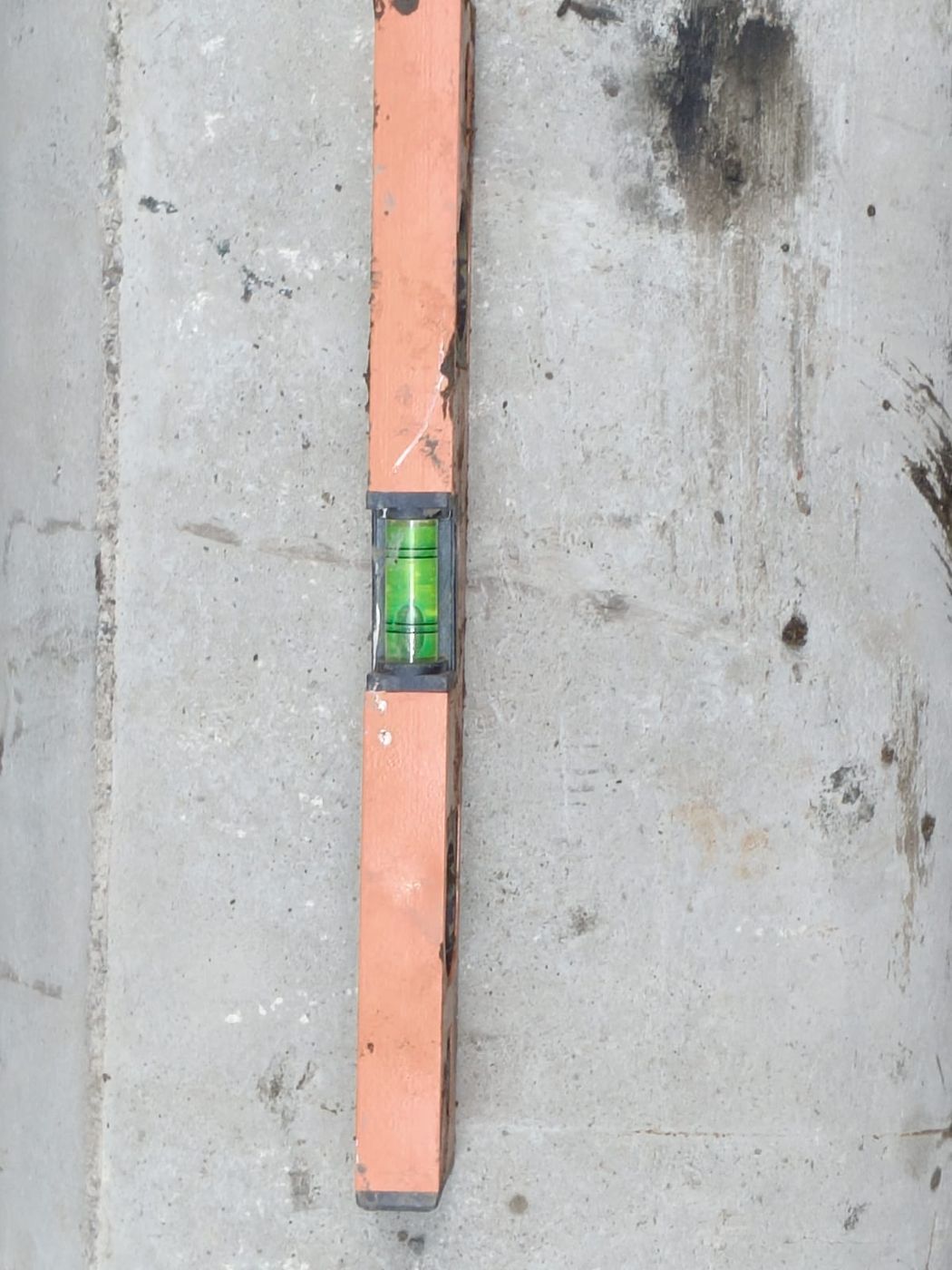
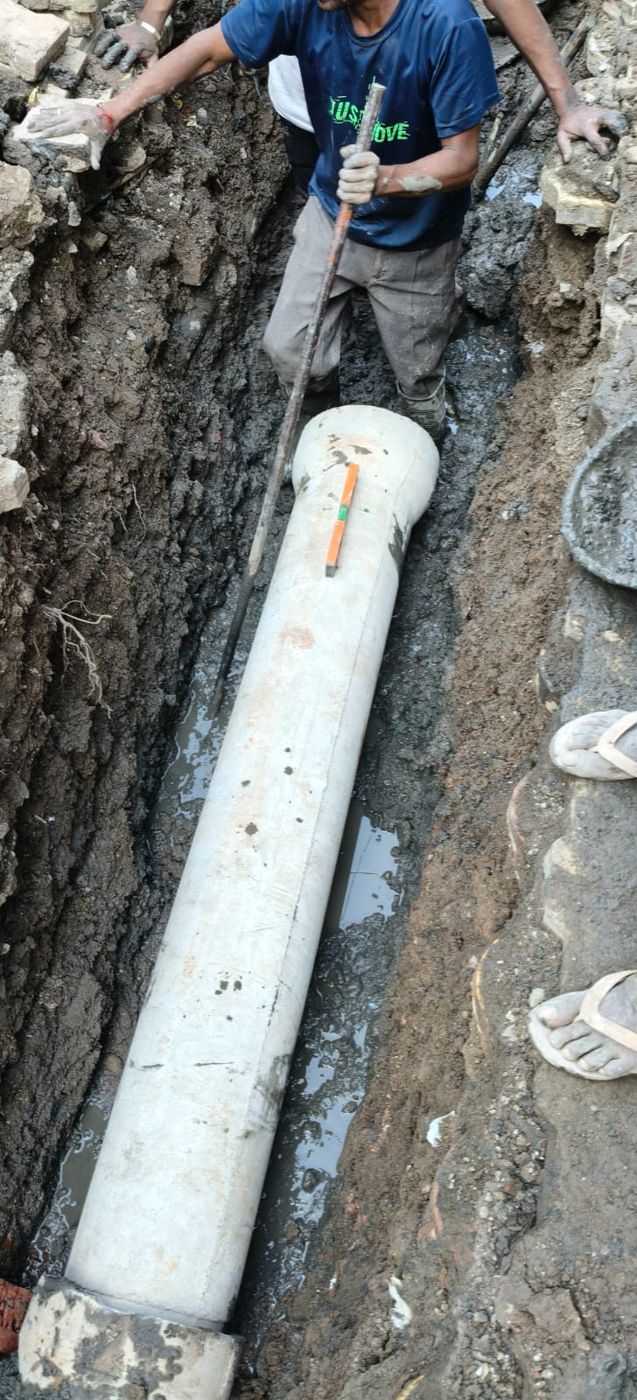
Verified the level of every pipe during laying and matched it against the design slopes, correcting any deviation on the spot.
Nine lines, one outfall. Each colour on the flow plan is a separate line, planned and measured on its own.
Civikor's survey-led planning and close supervision gave Kailash Nagar a drainage network that works as designed:
Precisely set slopes carry wastewater from every lane to the nala by gravity alone.
Every pipe was checked against design levels, so the built network matches the plan.
Mapping utilities before digging reduced damage to existing services and rework on site.
A line-by-line record of all 1,125.89 m gives the council clear, verifiable measurements.
Recorded manhole and invert levels give the council a reliable reference for future servicing.
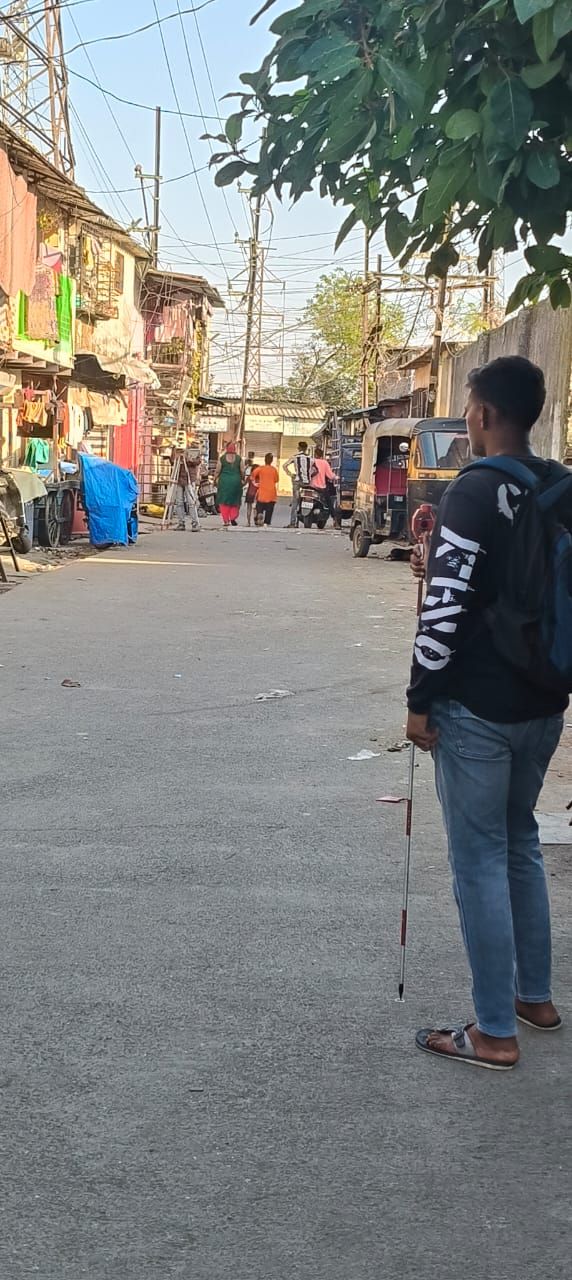
Visual documentation of survey, planning, execution and supervision
Let's discuss how Civikor can plan it right from the first survey to the last pipe.
Start a Conversation Case Study · Project Management Consultancy

CONTACT

Civil engineering consulting firm delivering precision-built infrastructure for municipalities across India.